



Ever wonder why your sleek smartphone or trusty laptop starts acting a little off after a few years? Sure, software updates and wear-and-tear play a part, but there’s a sneaky little component inside that’s quietly changing too: the multilayer ceramic capacitor (MLCC). These unsung heroes are the backbone of modern electronics, storing and managing electrical charge like mini energy vaults. But here’s the kicker—they age, just like us. Not in a “wrinkles and gray hair” way, but in a way that impacts how much charge they can hold over time. Let’s unpack this phenomenon with a vibe that’s equal parts geeky and chic.
What’s Aging Got to Do With It?
Picture this: an MLCC is like a tiny sponge tucked inside your device, soaking up electrical charge to keep everything running smoothly. When it’s fresh out of the factory—or after a good soldering session—it’s plump and ready to hold a hefty amount of juice. But over time, that sponge starts to shrink. Not physically, mind you, but in its capacity to store charge. This is what we call capacitor aging—a natural process where the capacitance (that’s the charge-holding ability) dips as the days tick by.

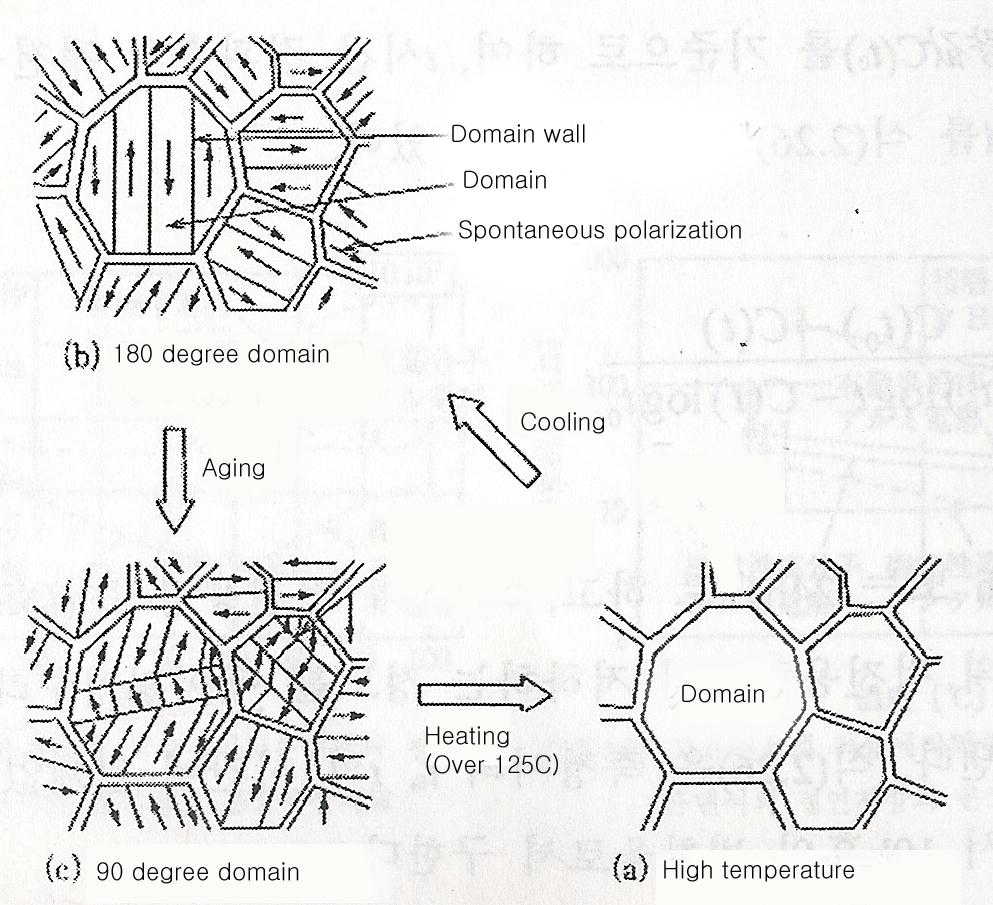
Why does this happen? It’s all about the magic material inside: a ceramic dielectric, often made of barium titanate (BaTiO3). This stuff is ferroelectric, meaning it has tiny electric dipoles that can shift around. When it’s new or freshly heated, these dipoles are a chaotic dance party—random and wild, giving the capacitor max storage power. But as time rolls on, they start lining up like obedient little soldiers, and that alignment shrinks the capacitance. It’s not a dramatic drop, though—it’s a slow, logarithmic fade, meaning it loses more at first and then chills out.
For example, a typical X7R capacitor might shed about 1% of its capacitance per decade of time—that’s every jump from 1 to 10 hours, 10 to 100, and so on. So, after 1,000 hours (about 42 days), it’s down a few percent, but still doing its job.
The Science, Simplified
Let’s get a little nerdy, but I promise it won’t feel like a lecture hall. Inside these MLCCs, the ceramic has domains—think of them as microscopic neighborhoods where electric dipoles hang out. Fresh off the heat (above the Curie point, around 130°C for BaTiO3), these domains are scrambled, and the capacitor’s at peak performance. But as it sits there, cooling off and aging, those domains get cozy and align, reducing the dielectric’s mojo. It’s like the capacitor’s internal Feng Shui goes from chaotic chic to minimalist bore.
Here’s the stylish twist: you can reset this aging process. Crank the heat above that Curie point—say, during soldering or a quick oven sesh at 150°C for 30 minutes—and boom, the domains scatter again. It’s like hitting the refresh button on your capacitor’s youth. Soldering it onto a circuit board? That’s a free de-aging spa day right there.
Why Should You Care?
If you’re an electronics designer—or just a tech enthusiast with a soldering iron—this aging gig matters. Capacitance changes can mess with circuits that rely on precise timing or filtering, like the ones in your smartwatch or car’s audio system. Imagine your playlist skipping because a capacitor’s feeling its age—not cool.
But here’s the good news: it’s predictable. Manufacturers like Samsung and KEMET give you the deets, specifying capacitance at a referee time (usually 1,000 hours post-heat). So, a 10µF capacitor might read 11.2µF right after soldering—out of spec, sure—but by 1,000 hours, it’s settled into its promised range. Smart designers factor this into their plans, ensuring their creations stay on point.

Not all MLCCs age the same. Class I capacitors (think C0G) are the ageless wonders—stable and unbothered. But Class II ones, like X7R or X5R, are the divas that shift with time. Choose wisely based on your project’s vibe.
Need a reliable supply of MLCCs to keep your production on track? Our in-stock Samsung and Yageo MLCCs come with fast, reliable global delivery and are trusted by top OEMs worldwide
Pro Tips for the Tech Trendsetters
Want to stay ahead of the curve? Here’s how to handle MLCC aging like a pro:
- Timing is Everything: Measuring capacitance right after soldering? Chill for at least 24 hours. That fresh-off-the-board reading might be high—totally normal. Give it time to settle.
- De-Age Like a Boss: Got old stock sitting on the shelf with low capacitance? Pop those babies in a 150°C oven for 30 minutes. They’ll bounce back to their original glory.
- Know Your Rates: Check the aging rate(k) from the manufacturer (e.g., 1% per decade for X7R). You can even calculate the value of k where it’ll land with formulas like
Ct = C1 [1 – (k/100) * log10(t)]
Ct: is the capacitance t hours after the start of the ageing process
C1: is the capacitance 1 hour after the start of the ageing process
k: is the ageing constant in percent per decade (as defined above)
t: is the time in hours from the start of the ageing process
- Pick Your Player: For rock-solid stability, go Class I. For flexibility with a bit of flair, Class II’s your jam—just account for the aging.
The Takeaway
Aging in multilayer ceramic capacitors isn’t a flaw—it’s a feature of their ferroelectric swagger. These little components evolve over time, and with a bit of know-how, you can keep them in check. Whether you’re designing the next must-have gadget or scaling up production, understanding this process adds a layer of cool to your toolkit.
Ready to power your projects with top-tier MLCCs? Visit our MLCC products for competitive pricing and expert support to keep your world connected, one charge at a time.